

I’ve always been fascinated by the Nazgûl. These guys are terrifying, iconic villains who show up in basically every adaptation of The Lord of the Rings, but here’s the weird thing: we barely know anything about who they actually were. And I mean barely. For characters that important to the story, Tolkien was surprisingly stingy with details about their identities.
TL;DR

Only three Nazgûl are named in Tolkien's works: the Witch-king of Angmar (their leader), Khamûl the Easterling (second-in-command), and possibly the "Black Númenórean" mentioned in texts. The other six remain deliberately unnamed. They were once great kings of Men who accepted Sauron's Nine Rings and became corrupted into wraiths, but Tolkien intentionally left most of their identities mysterious.
So let’s dig into what we actually know about the Nine, what we can reasonably guess, and why Tolkien probably kept them mysterious on purpose.
What Tolkien Actually Told Us
Here’s the frustrating truth: out of nine Ringwraiths, Tolkien only explicitly names one or two of them, depending on how you count.
The Witch-king of Angmar is the only one we know for certain. He’s the leader, the most powerful, the one who stabs Frodo at Weathertop and gets taken down by Éowyn and Merry. We know he ruled the kingdom of Angmar in the north, that he destroyed the kingdom of Arnor, and that he was an incredibly powerful sorcerer. But even with him, we don’t know his original name or which of the Nine Rings he received first.
The second named Nazgûl is Khamûl the Easterling, also called the Shadow of the East. He’s mentioned in Unfinished Tales as the second most powerful Ringwraith and the only one named besides the Witch-king. We know he came from the East (Rhûn, presumably) and that he was the Nazgûl who nearly caught Frodo at the Bucklebury Ferry. That’s basically it.
And that’s where the concrete information ends. The other seven? Complete mysteries.
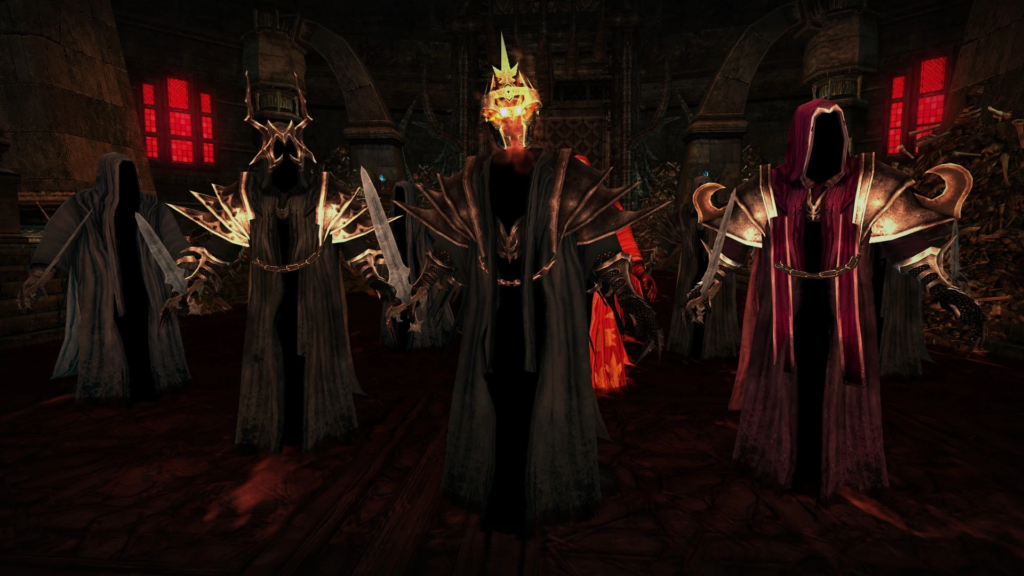
What We Know About Their Origins (In General)
Tolkien tells us that the Nine were “mortal men doomed to die” who received the Nine Rings from Sauron during the Second Age. They were kings, sorcerers, and warriors, the greatest of their time. The rings gave them power, extended their lives, and eventually turned them into wraiths completely enslaved to Sauron’s will.
The process took time. They didn’t immediately become the terrifying Nazgûl we know. First they gained power and influence. Then they became invisible. Eventually they faded entirely into the wraith-world, losing their physical forms and becoming Sauron’s most feared servants.
We also know from Tolkien’s letters that three of the Nine were “great lords of Númenor.” This is huge because Númenóreans were basically super-humans, longer-lived and more powerful than ordinary men. If three Nazgûl came from Númenor, they would have been among the most dangerous.
The Theories and Speculation
Since Tolkien didn’t name them, fans and scholars have been speculating for decades about who the other Nazgûl might have been. Here are the most common theories:
Some believe that one or more were kings of the Southrons or Haradrim, the peoples south of Gondor. This would explain why those regions remained allied with Sauron into the Third Age. If their ancient kings became Nazgûl, that’s a pretty strong historical connection.
Others think some were Easterling lords like Khamûl, powerful rulers from Rhûn who fell under Sauron’s influence early in the Second Age.
There’s also speculation about Black Númenóreans, descendants of Númenóreans who settled in Middle-earth and turned to evil. These guys were sorcerers and tyrants who worshipped Sauron even before the fall of Númenor. Some of them definitely could have been among the Nine.
Why Tolkien Kept Them Anonymous
Here’s what I think is actually going on: Tolkien deliberately left them unnamed because their individual identities don’t matter anymore. That’s the whole tragedy of the Nazgûl. They were once kings and heroes with names, histories, and kingdoms. But the rings stripped all of that away. They’re not people anymore. They’re extensions of Sauron’s will, shadows of their former selves with no independent identity.
This makes them way more terrifying than if we knew all their backstories. The Nazgûl represent the ultimate corruption, the complete loss of self. Giving them detailed biographies would humanize them in a way that undermines what they symbolize. They’re warnings about the corruption of power, not characters we’re supposed to sympathize with or understand deeply.
Plus, mystery is powerful in storytelling. The less we know about the Nazgûl, the more frightening they become. They’re faceless, nameless servants of evil. That’s way scarier than “here’s Bob the Nazgûl, former king of this specific place with this specific tragic backstory.”
What the Adaptations Did
The movies and video games have tried to fill in the gaps over the years, but none of it is canon. The Shadow of Mordor and Shadow of War games give names and backstories to several Nazgûl, but these are inventions by the game developers, not Tolkien’s work.
Some adaptations hint at the Nazgûl being fallen Númenórean lords or corrupted Eastern kings, but again, this is speculation built on the very limited information Tolkien provided. It’s fun to explore in games and fan fiction, but it’s not actual lore.
The Philosophical Angle
There’s something deeply meaningful about the Nazgûl being anonymous. Tolkien was writing about the nature of evil and corruption. The Nine accepted power from Sauron thinking they’d remain in control, thinking they’d keep their kingdoms and their identities while gaining immortality and strength. Instead, they lost everything that made them who they were.
By the time we meet them in The Lord of the Rings, they’re not the kings they once were. They’re slaves. Husks. The rings that promised them everything took everything instead. That’s the point. Their names don’t matter because they don’t exist as individuals anymore.
This ties into one of Tolkien’s major themes: the corrupting nature of power and the danger of trying to dominate others. The Nazgûl are the ultimate cautionary tale.
My Conclusion
We know the identities of one or maybe two Nazgûl out of nine, and that’s probably all we’re ever going to know. The Witch-king and Khamûl are named, the others aren’t, and I don’t think that’s an oversight. It’s intentional.
The Nazgûl aren’t meant to be nine distinct characters with rich backstories. They’re meant to be a unified force of terror, the personification of what happens when you trade your soul for power. Making them anonymous serves that purpose perfectly.
Could Tolkien have named them all and given them detailed histories? Absolutely. He created entire genealogies for minor Hobbit families. He could have easily written out who each Nazgûl was. But he chose not to, and I think that choice makes them better villains.
So while I’d love to know more about who they were before the rings corrupted them, I also appreciate the horror of their anonymity. They’re no one now. Just shadows and terror. And that’s exactly what makes them unforgettable.
Check out Fandom by It’s Netflix Nerd for all the fan theories / fandom about Netflix movies and series.